Architecture and construction · Website design and development
DECO Studio + Builders
The brief
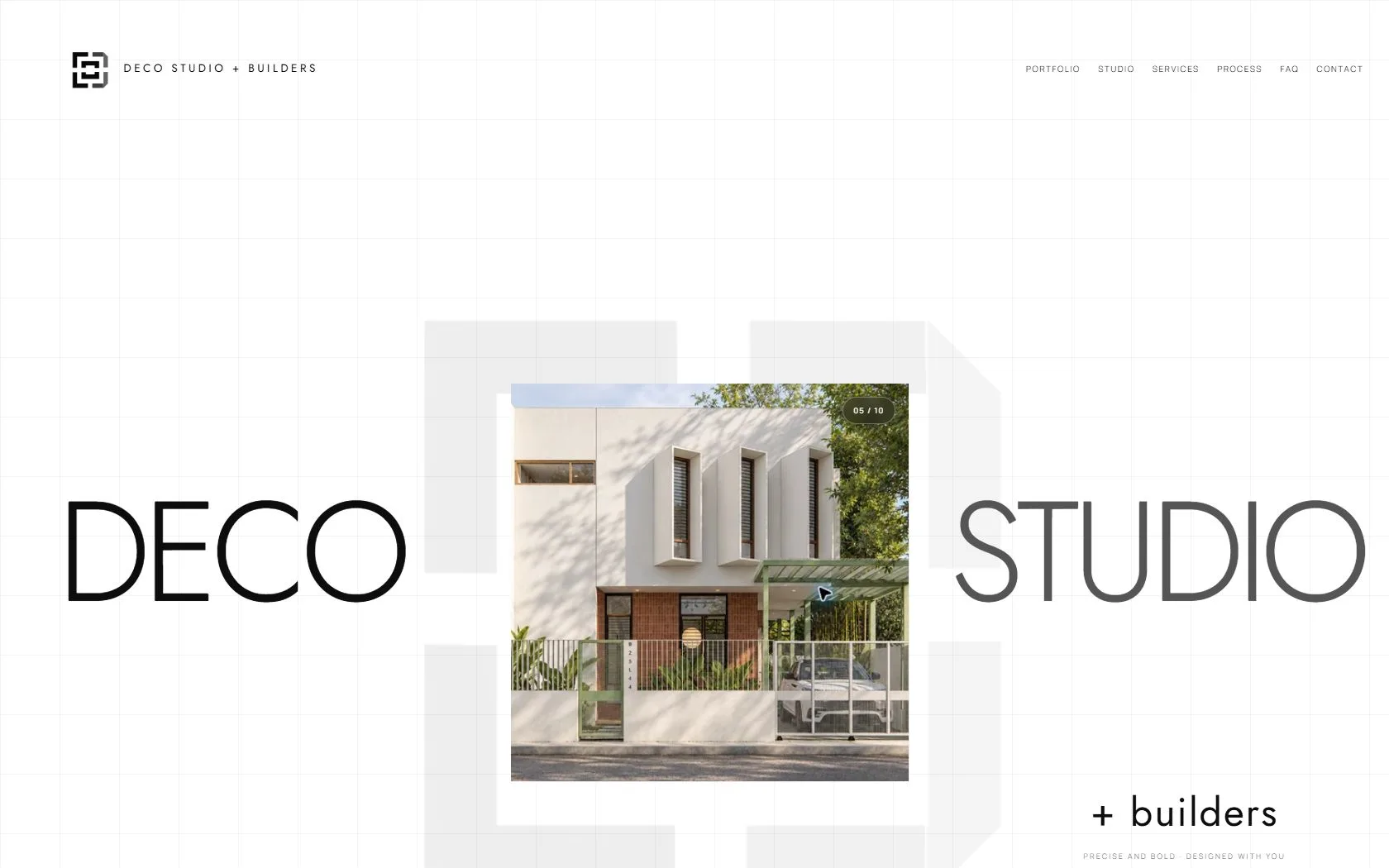
DECO Studio + Builders needed a new website. I designed and created the site, with a portfolio showcase at the center of the experience. The existing project description identifies architecture, interiors, and construction as the areas presented by the business. It describes a visual portfolio with clear service pathways and a route to consultation enquiries.
The goal of a portfolio website is to make the work accessible to a prospective client who may not yet know the business. In this project the site combines imagery and project examples with information about services, allowing the work and the offer to support each other. The brief supplied for this case study confirms the new website and portfolio focus; it does not provide a numerical target.
Constraints and approach
Design was the principal challenge identified for the project. An architecture and construction portfolio has to show visual work while still explaining what the business does. The design needs to give images enough space to be useful, while helping visitors understand the services and find a way to make an enquiry.
The existing portfolio describes an interactive gallery of 23 projects. That amount of work requires an organized presentation, not just a single introductory image. The documented solution brings immersive project imagery together with the gallery, service pathways, and consultation lead generation. Specific client-imposed deadlines, budget constraints, and alternative designs are not recorded and are not claimed here.
What was built
I designed and created the site with a portfolio showcase. The existing project description highlights immersive project imagery and an interactive gallery containing 23 projects. The gallery gives the business a way to present a body of work; the service pathways help connect that work with what a prospective client can request.
The site also includes a path to consultation enquiries. That matters because a portfolio can demonstrate capability, but a visitor still needs a clear next step if the work is relevant to their own project. The existing screenshot is shown as a reference to the public-facing site. Permission to reuse it and any images visible within it should be confirmed before publishing this dedicated case study.
Design and technical decisions
The user identified HTML as a technology used for the site. The project record does not establish a complete framework or library list, so none is added here. The confirmed design direction combines imagery, an interactive portfolio, responsive design, and service communication.
The choice to give project imagery a prominent role fits an architecture and construction showcase: visitors can see examples of the work rather than relying solely on a written description. The gallery’s 23 projects provide breadth, while the surrounding service pathways and consultation route give context to what visitors see. These are descriptions of the documented design and its purpose, not claims about an unrecorded design process.
The portfolio experience
The portfolio showcase has two related jobs. First, it gives the visitor a visual introduction to the work. Second, it offers a way to browse a wider selection of projects instead of relying on a single image. The documented interactive gallery contains 23 projects, making it a significant part of the site rather than a small decorative section.
For a visitor considering an architecture, interiors, or construction project, examples can help communicate the type of work a studio presents. The visitor can look through the portfolio and then move toward the service information that applies to their needs. The case study does not assert which projects produced enquiries, which images performed best, or how visitors used the gallery; those observations would require analytics or client feedback.
The responsive design noted in the portfolio also matters to the showcase. Project imagery and service information need to remain usable when the available screen changes. A potential client might discover the studio on a phone and return to review the work on a larger screen. The documented responsive approach provides the design context, but no specific device testing results or performance scores are available in the supplied notes.
The consultation pathway is the connection between exploring work and starting a conversation. Its presence is a feature of the site, not evidence of a particular number of leads. It is described here so that the portfolio is understood as part of a business website with an intended next step, rather than only an image gallery.
Result and reflection
The result recorded in the portfolio is a website for DECO Studio + Builders with an interactive project gallery, responsive presentation, clear service pathways, and a consultation enquiry route. My role was both designer and developer. The live website is linked for context; its current content may differ from the version shown in the portfolio asset.
No verified figures for enquiries, conversion, traffic, or project duration were provided. Those results can be added if the client confirms them and supplies a measurement period. The case study deliberately reports the features that are known rather than turning the presence of an enquiry route into an unsupported claim that enquiries increased.
Project image