Motorcycle touring · UK and Europe · Website design and development
Wild Roads Motorcycle Tours
The brief
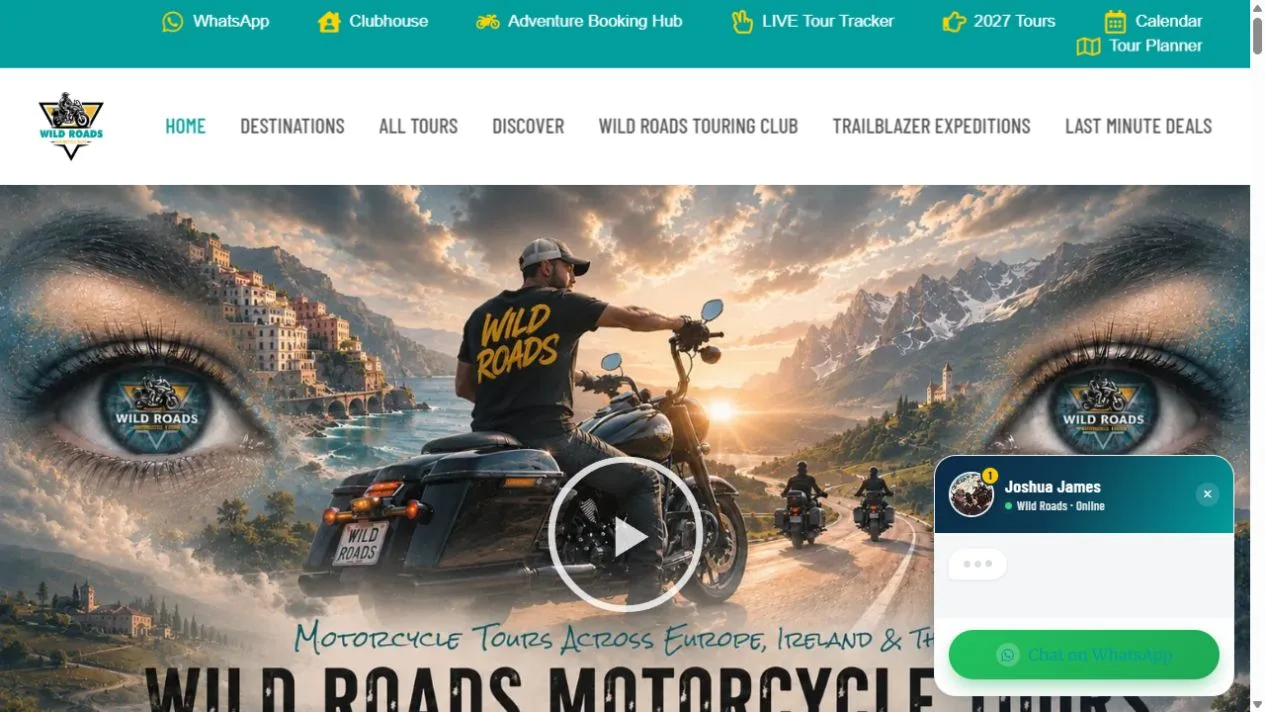
Wild Roads Motorcycle Tours sells guided and self-guided motorcycle experiences. The project presents touring as an experiential purchase: a rider needs to imagine the journey while also finding practical information about dates, availability, pricing, and what to do next. The supplied brief describes a premium product where the decision is considered rather than impulsive.
The website brings together tour discovery, a card system, a map, tour packs, communication tools, and a live tour tracker. Those elements serve different points in the journey. A prospective rider may begin with an inspiring destination, compare the available trips, download further details, or contact the team with a question. The design needs to make those options available without making the catalogue feel like a wall of competing notices.
Constraints and approach
The brief calls for a balance between emotion and practical decision-making. A destination and its imagery help communicate the experience, while dates, prices, and availability help a rider decide whether a trip is possible. Scarcity or limited availability can be relevant, but the presentation should communicate the actual state rather than manufacture pressure.
The documented stack is WordPress with custom post types for tours. The project also includes a lazy-loaded map facade, PDF tour pack delivery, WhatsApp and live-chat widgets, and an external live tour tracker. These are distinct parts of the experience: the site’s tour information, a map loaded on request, downloadable detail, direct communication, and a separate tracker. The case study does not claim a measured effect on sales or booking volume.
Tour content and card states
The custom post type gives tours a structured place in the WordPress content model. The tour card system presents the practical fields identified in the brief: date, price, and availability. These states let a visitor compare trips while keeping the information tied to the tour it describes.
For a considered purchase, the card should make the next decision easier. A rider can scan the available options, identify a relevant date or destination, and continue to the fuller details. Availability is surfaced as information rather than as a reason to add unrelated promotional elements around every card. The exact state for a tour must remain accurate as the business updates its catalogue.
The supplied brief included a price range, but prices can change and the range was not independently confirmed for this case study. It is therefore omitted here rather than presented as a current offer. The live site should be consulted for current tour dates, prices, and availability.
Map facade and tour pack delivery
The map uses a poster facade that loads the interactive map on demand. This gives the visitor a visible invitation to explore while postponing the heavier map experience until it is requested. The decision addresses an important trade-off: a map can help communicate a route, but loading an embedded interactive service immediately is not necessary for every visitor who reaches the page.
The tour pack flow provides a different level of detail. A PDF gives an interested rider a document to review after the initial discovery stage. The brief identifies delivery of the pack, but does not specify a measured download rate or the complete fulfilment process; neither is invented here. The link between the overview and the pack is part of the content journey, allowing a visitor to move from a concise card toward more detailed information.
These features complement rather than replace the rest of the site. The card gives a quick comparison, the map offers spatial context when requested, and the pack provides material for a more deliberate review. The actual map and document behavior should be retested whenever an integration or tour listing changes.
Communication and result
The project also includes WhatsApp and live-chat widgets, alongside an external live tour tracker. The live site presents a tracker and tour-pack links; the tracker is a separate destination rather than evidence that the WordPress site itself implements every tracking function. Communication tools give a visitor a way to ask about a trip when the public information does not answer their question.
The documented result is a WordPress touring experience that joins structured tours, useful card states, on-demand mapping, pack delivery, and direct communication. Its purpose is to support both the appeal of the journey and the practical decision about a specific trip.
No verified conversion rate, booking increase, page-speed improvement, or revenue figure was supplied. The case study reports the features and design decisions without inventing a business result. Current prices and availability belong on the live site, where the operator can maintain them.
Project image