Digital agency · Website design
RV Multimedia
The brief
RV Multimedia is a digital agency offering a range of services. My role on this project was website design. The existing portfolio describes the result as a focused agency experience connecting web development, brand, content, video, and business support. The design had to bring these different areas into a single website experience that a prospective client could understand.
An agency offering several types of support needs a clear way to communicate its scope. A visitor may arrive looking for one service and only later discover related capabilities. The design can help by presenting those capabilities as parts of a coherent offer while keeping the path to each service understandable. The available project description does not establish a specific campaign target or a measured business outcome.
Constraints and approach
The main design challenge reflected in the project description is breadth: web development, brand, content, video, and business support each have their own purpose. A site that presents them together needs to remain readable and focused instead of requiring the visitor to understand the agency’s internal structure first.
The portfolio identifies WordPress, strategy, and responsive design as the project’s stack and disciplines. My confirmed role is website designer. The record does not specify which theme or builder was used, who implemented every part of the site, or which design alternatives were considered. Those details remain open for confirmation and are not asserted here.
What was designed
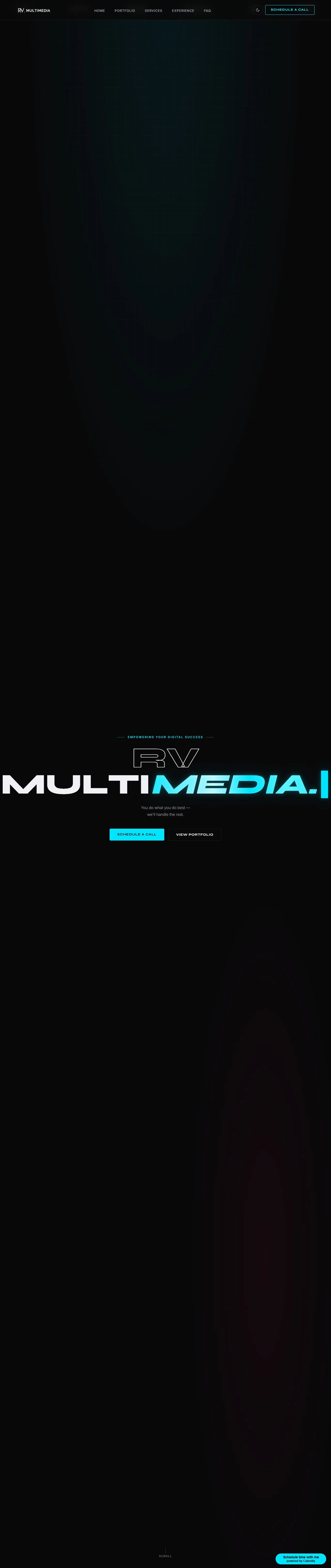
The website brings the agency’s services together in a focused presentation. Its job is to introduce the business, communicate the available areas of support, and help a prospective client make sense of a broad service offering. The existing portfolio screenshot shows the homepage and is included here as a reference, pending confirmation of permission to reuse it in a dedicated case study.
Responsive design is part of the documented project. That matters for an agency website because a visitor may discover the business on a phone, review its work on a laptop, or return later on another screen. The design should communicate the same service offer across those contexts, while allowing the layout to adapt to the available space. This is the purpose of responsive design, not a claim about a particular device test or measured performance result.
Design and technical context
The recorded platform is WordPress. A WordPress site can support an agency’s changing content needs, but the provided project notes do not establish the precise editing workflow or how the site was implemented. For that reason this case study focuses on the confirmed design role and the service presentation rather than inventing a theme, plugin list, or custom implementation.
The design decision visible in the project description is to connect several related disciplines within one focused agency experience. Web development, brand, content, video, and business support are distinct services, yet they can also be relevant to the same client. Presenting them together gives the agency a way to show that range. The specific navigation structure and reasons for individual layout choices should be confirmed before they are described as documented decisions.
Presenting a broad service offer
The range of services is central to understanding the project. Web development and brand work can be relevant at the start of a client’s online presence, while content and video support how that presence is maintained and communicated. Business support is another part of the offer. The portfolio description places these services within one agency experience.
For the website designer, that breadth creates a communication problem: visitors need to recognize the service they came for while also seeing the wider context. A focused presentation helps connect the parts of the offer. The available record does not specify an original sitemap or a documented change in user behavior, so this study does not claim that a particular navigation pattern produced a measured improvement.
Responsive design is included in the existing portfolio’s description. A service website must be legible and navigable in more than one viewport, including the smaller screens on which visitors may first encounter it. This account describes responsiveness as part of the project scope; it does not invent a device matrix, accessibility audit, or performance score.
WordPress is the documented platform. The user confirmed the role as website designer, so the case study does not assume responsibility for every implementation detail. If the theme, builder, collaborators, or design process are confirmed later, they can be added to make the account more precise. The existing image provides a visual reference, subject to permission review.
Result and reflection
The portfolio presents RV Multimedia as an agency website connecting its range of services. The live site is linked for context, though its current content may have changed since the project screenshot was captured. The work illustrates a common design problem: explaining several services in a way that feels like one business rather than a disconnected list.
There are no verified figures for enquiries, conversion, audience growth, or project duration in the supplied materials. No numerical result has been added. If the client can share a verified outcome and measurement period, it can be incorporated later. Permission to reuse the existing screenshot and any visible third-party material also needs confirmation before the case study is published.
Project image